
The Ultimate Guide to Proper Bathroom Exhaust Venting Through the Roof
There is nothing quite like a steaming hot shower to warm up after a freezing winter day here in Sauga. While you are enjoying the warmth, your bathroom exhaust fan is hard at work pulling all that dense, humid air out of the room. But have you ever wondered where exactly that moisture ends up? If your home is like many others in our area, there is a chance that steam isn't making it all the way outside. Improper exhaust routing is one of the most common, yet overlooked, roofing issues homeowners face, and it can lead to significant damage over time.
When humid air is not properly directed outside, it often ends up trapped inside your home's structure. Understanding the mechanics of proper ventilation is essential for maintaining the health of your roof and the safety of your living space. In this guide, we will explore exactly why getting that moisture out is so critical, the warning signs that your current system might be failing, and the correct methods for ensuring your home can breathe easily all year round.

Why Venting Into the Attic is a Recipe for Disaster
One of the most frequent mistakes we encounter is an exhaust fan that simply dumps humid air directly into the space above the ceiling. Your attic is designed to remain cool and dry, especially during the colder months. When warm, damp air from your bathroom meets the freezing temperatures of a winter attic, it instantly condenses into water.
This continuous cycle of condensation can wreak havoc on your home's structural integrity. Over time, the moisture leads to wood rot on your roof decking, compromises the effectiveness of your insulation, and creates the perfect environment for mold and mildew to thrive. Homeowners often ask us about the signs of bathroom fan venting into attic spaces. The most obvious indicators include dark stains or water spots on your bathroom ceiling, a persistent musty smell in the upper levels of your home, and visible frost accumulating on the underside of your roof decking during the winter. You might also notice that your heating bills are creeping up, which happens when your insulation becomes damp and loses its thermal resistance.
If you suspect your exhaust fan is terminating prematurely, it is crucial to address the problem before the structural damage becomes severe. Ensuring a proper attic installation for all your ductwork is the first line of defense against these hidden moisture problems.
How to Properly Route Air Outside
So, what is the right way to handle this moisture? The only truly effective solution is ensuring the air is expelled completely outside of the building envelope. When figuring out how to vent bathroom exhaust through roof systems, there are a few critical steps that must be followed to ensure longevity and performance.
First, the ducting itself matters immensely. We always recommend using rigid or semi-rigid insulated ducting rather than the cheap, uninsulated flexible foil hoses. Insulated ducts keep the moist air warm as it travels up toward the roof deck, preventing it from condensing inside the pipe and running back down into your bathroom fan housing. The path of the duct should be as short and straight as possible; every bend and curve reduces the fan's efficiency and gives moisture a place to settle.
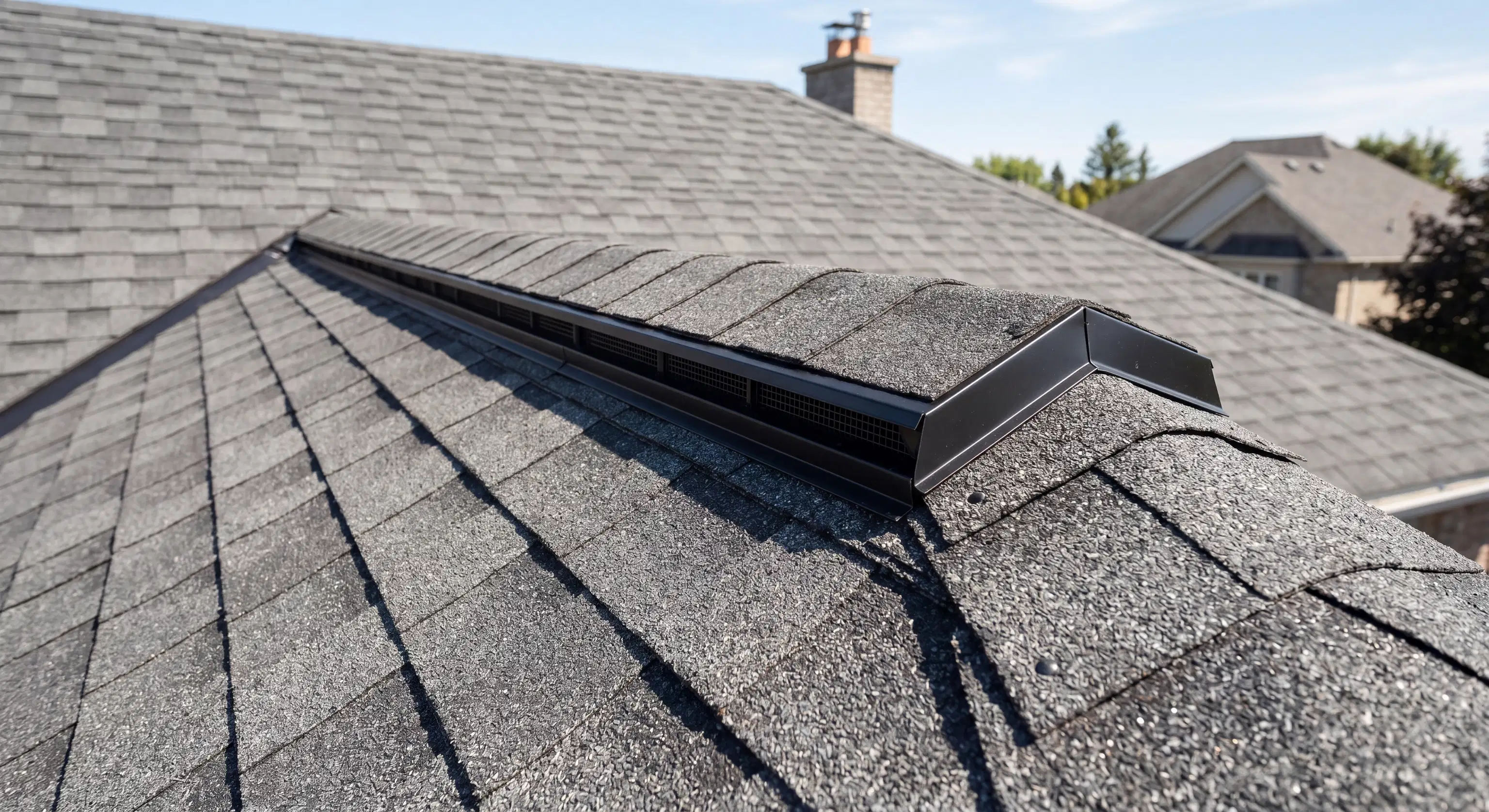
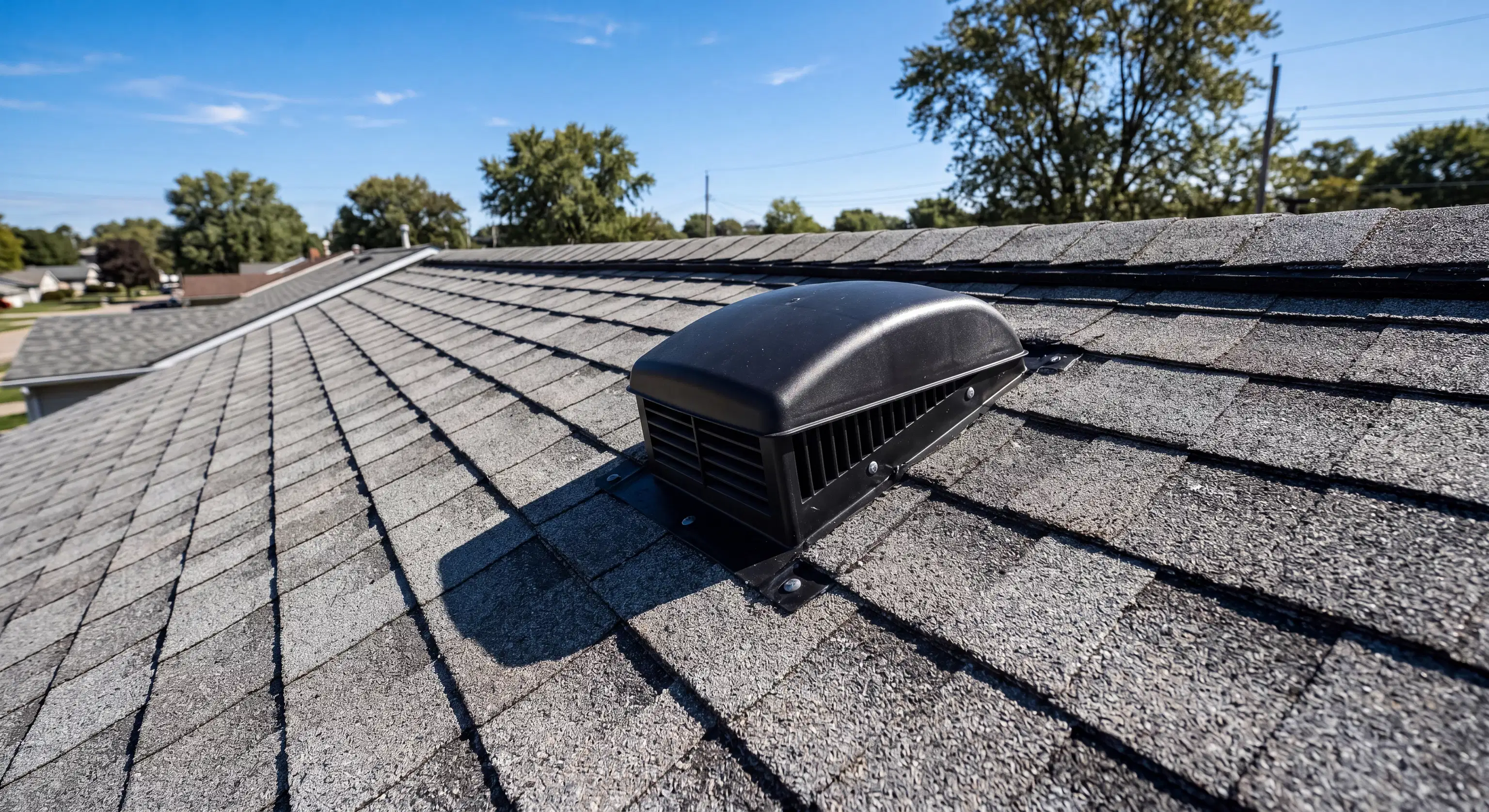
Next comes the roof penetration itself. This is where professional expertise is absolutely necessary. A specialized exhaust vent cap must be installed on the roof, complete with a built-in damper. This damper opens when the fan pushes air out and seals shut when the fan is off, keeping rain, snow, and pests from getting inside. The flashing around this vent must be meticulously integrated with your shingles. Given the heavy snow loads and unpredictable weather we experience, a poorly sealed vent is a guaranteed future leak.
For homeowners looking to upgrade or fix their current setup, professional washroom and kitchen vents installation ensures the job is done safely and securely, protecting your roofing warranty and your home's interior.
Explore our washroom and kitchen vents installation services
Protecting Your Roof from Moisture and the Elements
Preventing attic moisture from exhaust ducts isn't just about the bathroom; it ties into the overall health of your entire roofing system. The heavy lake effect weather we get rolling in can drastically increase the ambient humidity and precipitation your roof has to battle on the outside. If your roof is also fighting trapped moisture from the inside, its lifespan will be severely reduced.
Properly sealed exhaust vents work hand-in-hand with your home's general intake and exhaust ventilation systems. When your attic is breathing correctly through soffit and ridge vents, any minor ambient moisture is swept away by continuous airflow. However, if your bathroom is dumping gallons of water vapor directly into that space, your general ventilation simply cannot keep up. This imbalance is exactly what causes severe ice damming in the winter, where escaping heat and moisture melt the snow on your roof, only for it to refreeze at the eaves, tearing off gutters and backing up under your shingles.
By ensuring that every bathroom and kitchen fan is securely vented through its own dedicated roof cap, you allow your general roof ventilation to do the job it was actually designed for: regulating temperature and preserving your shingles.
Read more about our comprehensive roof ventilation solutions
Final Thoughts on Roof Health
Your roof is a complex system of layers, airflow, and protective barriers. A single bathroom exhaust fan might seem like a minor detail, but improper venting can slowly compromise that entire system from the inside out. By keeping moisture where it belongs—outside—you protect your insulation, your roof decking, and the structural integrity of your home.
If you are unsure whether your fans are venting properly, or if you have noticed signs of moisture damage in your upper floors, it is always best to have a professional take a look. At Country Roofing Inc., our team has the experience and local knowledge to handle the unique weather challenges of The GTA. We pride ourselves on honesty, transparency, and delivering quality workmanship you can trust.
Ready to make sure your home is breathing right? Reach out to us today to schedule an inspection or to discuss your ventilation needs.